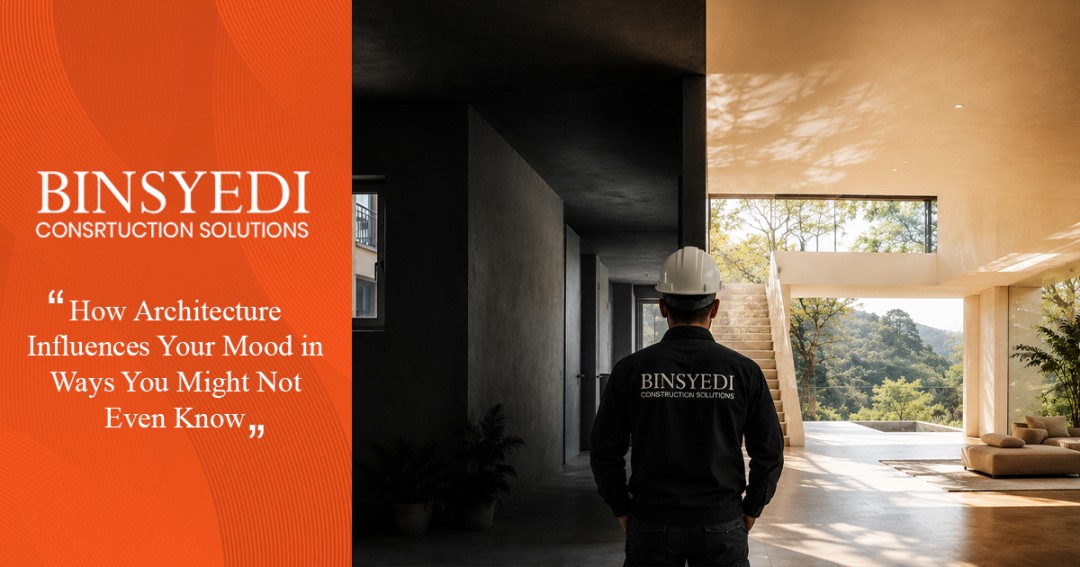
There is a reason why certain homes are able to soothe you right from the moment you enter. And then there is a reason why some homes, despite being quite costly, come off as a really expensive waiting room. The field of architecture has always focused on aesthetics and appearances. Words like elevations, facade, finishes from overseas, and “modern enough” come up in many discussions of houses. Yet, those that end up staying in our memories are seldom those that were purely aesthetic; rather they were those that were pleasant to live in.
Every element inside the house, be it the height of a ceiling, direction of sun rays, textures of walls, open spaces in rooms, or even the transitions from one room to the other, can influence your emotions, stress levels, and overall sense of comfort or discomfort. Architecture does not just create homes. Architecture creates experiences.
In a rapidly changing urban landscape like Lahore, this realization makes the distinction between a home that merely appears luxurious, and one that is truly luxurious. Emotional considerations in architecture at BinSyedi are accorded the same importance as aesthetic considerations because luxury goes beyond visual appeal. Luxury involves transforming a space to create an altered sense of life within that space.
Natural Light is Basically Free Therapy:
Everyone who has ever had to spend some time in a dimly lit corner during any kind of power cut in Lahore knows this intuitively. Light has a tremendous impact on the way we feel. High-energy rooms and better sleep cycles all have one thing in common, lots of sunlight. There’s something in humans’ nature that makes them seek out brightly lit corners.
Unfortunately, this has yet to be accounted for in many buildings, with tiny windows covered with curtains that are positioned weirdly and somehow let less light in than the dark attic. But modern luxury houses are beginning to compensate for that mistake of the past.
Thanks to huge windows, skylights, double-height voids, and strategically placed openings, the flow of light can be optimized inside a house. This leads not only to visually appealing rooms but also to emotionally brighter interiors.
No, this does not mean making your house a transparent greenhouse, fighting against Lahore summers like a soldier with a blind faith in his armor. Proper planning and good design will provide balance between beauty and functionality. The difference between “beautiful sunlight” and “sofa on fire” is very, very small indeed.
Ceiling Height Quietly Changes Human Behvaiour:
One of the amazing aspects of architecture is the emotional impact of proportions that goes completely unnoticed by anyone. Short ceilings often induce intimacy and concentration. High ceilings make one feel open, unrestricted, and luxurious. Double-story space is instantly luxurious before furnishing it with furniture and finishes.
This is called psychological scaling. For example, an architecturally well-designed entrance lobby, with a sense of verticality, induces a feeling of welcome. The lounge with high ceilings looks calm and non-restrictive. At the same time, short ceilings provide a warm, cozy atmosphere of the bedroom.
The smartest houses can vary this rhythm. Not all rooms need to look like a luxury atrium in a five-star hotel. No one wants to feel physically and emotionally small searching for food in their own kitchen at midnight. The idea is to maintain a balance between spaces. Architectural planning and design allow expanding and contracting the house to adapt to various moods and activities.
The Effect Of Materials on Comfort is Underrated:
It’s easy to associate luxury with “finishes that cost more money.”
But psychologically, comfort is highly dependent on texture and warmth of materials used. A room full of cold marble might impress from a visual standpoint but will create a sense of distance. And while we’re on the topic, shiny surfaces sometimes lead to rooms that feel more like lobby spaces than personal ones.
This is precisely why luxury modern homes now use natural materials in contemporary designs. Textures such as wood grain, matte colors, natural stone surfaces, textured walls, and soft neutral color schemes evoke calm and comfort. It’s highly unlikely someone will enter a room, notice walnut paneling, and OUTRIGHT say, “This walnut paneling has really helped regulate my emotions.” But their subconscious does process it.
Humans always respond to warmth and softness when it comes to textures. Spaces with textured elements create a calming effect. Quite frankly, it beats yet another imported chandelier which needs regular servicing.
Open Spaces Minimize Mental Clutter:
There is a reason why messy spaces can be nerve-wracking. It all goes back to the impact of architecture on cognitive burden. Tight circulation routes, bad design, blocked lines of sight, and constricted transition spaces trigger subconscious stress and fatigue. On the other hand, clever planning achieves quite the opposite effect.
Your house must have open layouts, smooth transitions, and be very wll connected, in order to feel comforting. The more effortless it is for a person to navigate a place, the calmer their stay there becomes.
However, it does not have to mean that all walls should be stripped away and turned into one big echo chamber where all conversations become everyone’s business.
The best designed modern houses manage to combine an element of openness with privacy and hierarchy. The living room is open yet secluded, dining room connected yet discreet, and the bedroom completely separate from the rest of the space.